What Is Momme? A Simple Guide to Silk Quality
If you've ever shopped for a silk sleep mask or pillowcase, you've probably come across the word "momme" and thought: what does that actually mean?
You're not alone. Momme is one of the most important indicators of silk quality, but most brands either don't explain it or bury it in jargon. By the end of this guide, you'll know exactly what momme means, why it matters, and how to use it to tell high-quality silk from the cheap stuff.
Momme, Explained Simply
Momme (pronounced "mom-ee") is a unit of measurement that tells you how much silk is packed into a piece of fabric. Think of it like thread count for cotton, except it measures weight and density rather than the number of individual threads.
Technically, one momme equals the weight in pounds of a piece of silk that's 100 yards long and 45 inches wide. So a fabric labelled "19 momme" weighs 19 pounds at that size, and a "23 momme" fabric weighs 23 pounds.
In practical terms: the higher the momme number, the denser, thicker, and more durable the silk. A higher momme count means more silk fibre per square inch of fabric, which directly affects how the product feels against your skin, how long it lasts, and how well it performs.
Why Momme Matters More Than You Think
When you're comparing two silk products, the momme weight is often the clearest indicator of quality. Here's what changes as the momme count goes up:
Durability. Higher momme silk is woven more tightly, which means it resists pilling, thinning, and tearing over time. A 23 momme silk mask will hold its shape and softness far longer than a 12 momme one, even with nightly use and regular washing.
Feel. Denser silk feels smoother and more substantial against your skin. Low-momme silk can feel flimsy or papery, while higher-momme silk has a rich, cool-to-the-touch quality that's immediately noticeable.
Performance. For sleep masks specifically, momme weight affects how well the mask blocks light, retains its shape throughout the night, and regulates temperature. Thicker silk breathes better and stays cooler, which sounds counterintuitive, but it's one of silk's unique properties.
Skin and hair benefits. Silk is naturally low-friction and non-absorbent, which is why dermatologists recommend it for reducing sleep creases and keeping night creams on your skin instead of soaking into your pillowcase. Higher-momme silk amplifies these benefits because the tighter weave creates an even smoother surface.
The Momme Scale: What the Numbers Mean
Not all silk is created equal. Here's a breakdown of what different momme weights are typically used for and what to expect from each:
6–12 momme — This is lightweight, sheer silk. You'll find it in decorative scarves, linings, and the cheapest "silk" sleep masks on Amazon. It's fragile, often see-through, and wears out quickly. Many budget masks in the $10–$20 range use silk in this range, if they use real silk at all.
16–19 momme — This is mid-range silk, commonly used in clothing and standard-quality pillowcases. It's a noticeable step up from the budget range: softer, more opaque, and more durable. Many well-known silk pillowcase brands use 19 momme, and it's a perfectly decent quality for everyday use.
22–23 momme — This is where premium silk begins. At this weight, the fabric is thick, smooth, and built to last. It's the most popular choice for high-quality silk bedding and sleep accessories because it strikes the ideal balance between luxury feel, durability, and breathability. The difference between 19 and 22+ momme is something you can feel immediately.
25–30 momme — This is ultra-premium, heavy silk. It's incredibly durable and luxurious, but also heavier and less breathable. It's typically used in high-end duvets, ceremonial garments, and specialty products. For a sleep mask, this weight can actually be too heavy, you want something that feels weightless on your face, not something that presses down.
So What's the Best Momme for a Sleep Mask?
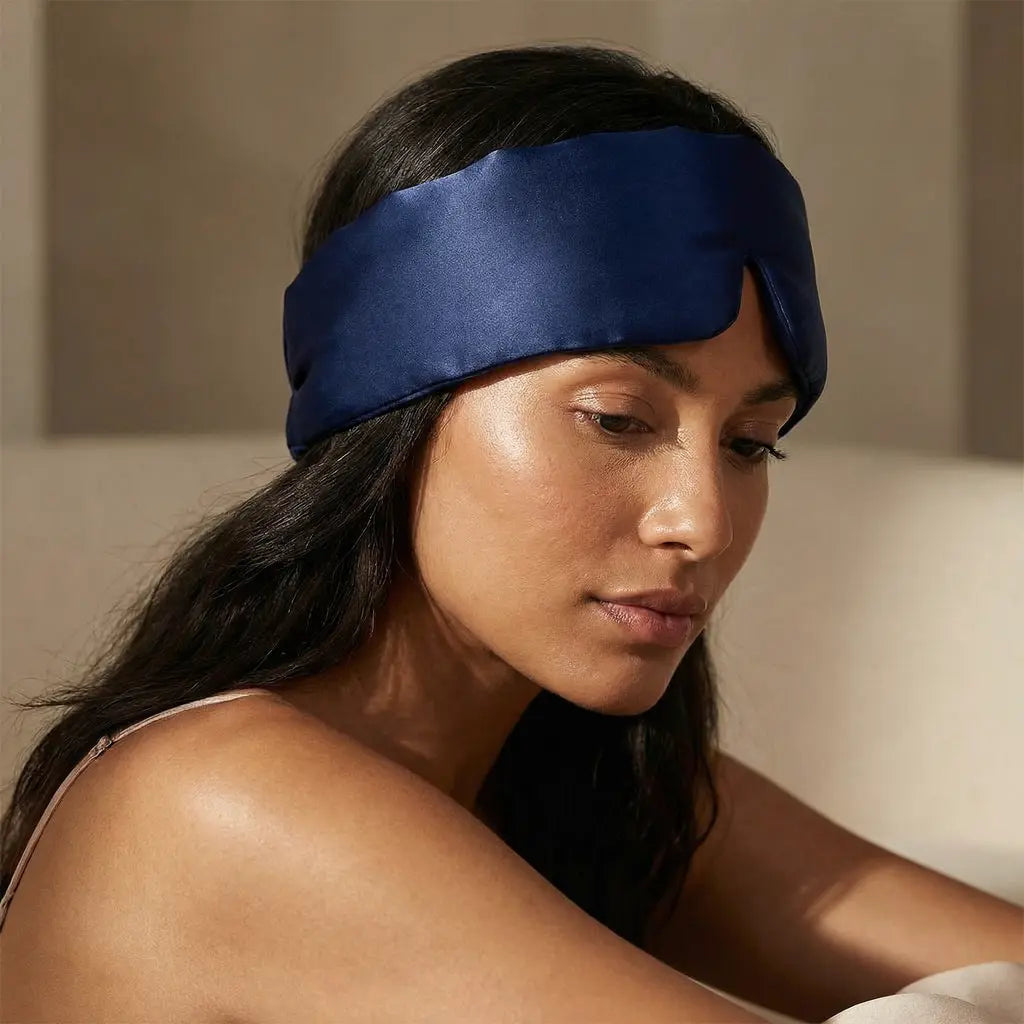
For sleep masks, the sweet spot is 22–23 momme.
Here's why: a sleep mask needs to be light enough to wear comfortably all night without creating pressure on your eyes, but dense enough to block light completely and maintain its shape while you move in your sleep. It also needs to be gentle on the delicate skin around your eyes, an area where friction and pressure can cause creases and puffiness over time.
At 22–23 momme, silk delivers on all of these requirements. It's smooth enough to glide over skin without tugging, dense enough to achieve full blackout, breathable enough to regulate temperature through the night, and durable enough to withstand regular washing without losing its quality.
Lower-momme masks (under 19) tend to let light seep through, feel insubstantial, and wear out within a few months of nightly use. Higher-momme masks (above 25) can feel heavy on the face and trap heat, the opposite of what you want when you're trying to sleep.
Momme Isn't Everything: Other Quality Signals
While momme weight is the single most useful number to look at, it doesn't tell the whole story. A few other things worth checking:
Silk type. Mulberry silk is the highest quality silk available for consumer textiles. It comes from silkworms fed exclusively on mulberry leaves, which produces longer, finer, and more uniform fibres than wild silk varieties. If a product just says "silk" without specifying mulberry, that's a yellow flag.
Silk grade. Silk is graded on an A to C scale, with further subdivisions (6A being the highest). Grade A silk has the longest, most uniform fibres and the smoothest surface. Not every brand discloses their silk grade, but the ones that use high-grade silk usually do, because it's a genuine selling point.
Certifications. Look for OEKO-TEX Standard 100 certification, which means the silk has been independently tested and verified to be free from harmful chemicals. This matters especially for a product that sits on your face for eight hours a night.
Fill material. Some silk masks have a silk exterior but use polyester padding inside. This defeats much of the purpose, the fill material affects breathability, weight, and how the mask feels against your skin. Look for masks that are silk throughout, not just on the surface.
How to Spot Low-Quality Silk
A few red flags to watch for when shopping:
If the product doesn't mention momme weight at all, it's almost certainly low-quality. Reputable silk brands are transparent about their momme count because they know informed buyers look for it.
If the price seems too good to be true, it probably is. Genuine 22+ momme mulberry silk costs significantly more to produce than a 12 momme blend. A $15 "silk" sleep mask is either very low momme, blended with synthetic fibres, or not real silk at all.
If the listing says "silky" or "satin" instead of "silk," you're likely looking at polyester. Satin is a weave type, not a material, and most satin products are made from synthetic polyester, which doesn't offer any of the skin, hair, or temperature-regulating benefits of real silk.
The Bottom Line
Momme is the simplest way to judge silk quality before you buy. For a sleep mask, aim for 22–23 momme mulberry silk, it's the range that gives you the best combination of comfort, blackout performance, breathability, and longevity.
Understanding momme puts you in a much better position to compare products and avoid overpaying for low-quality silk (or underpaying and ending up with something that falls apart in a month).
Your skin, your hair, and your sleep are worth getting this right.
At GLOWE, our Deep Sleep Mask is made from A6 grade, 23 momme pure mulberry silk — OEKO-TEX certified and designed for total blackout comfort. Shop the Deep Sleep Mask.